
XL BETS ON LIFE
Political prisoners, angular plastic surgeries and high rise apartments characterized the life of the world's most famous gambler.

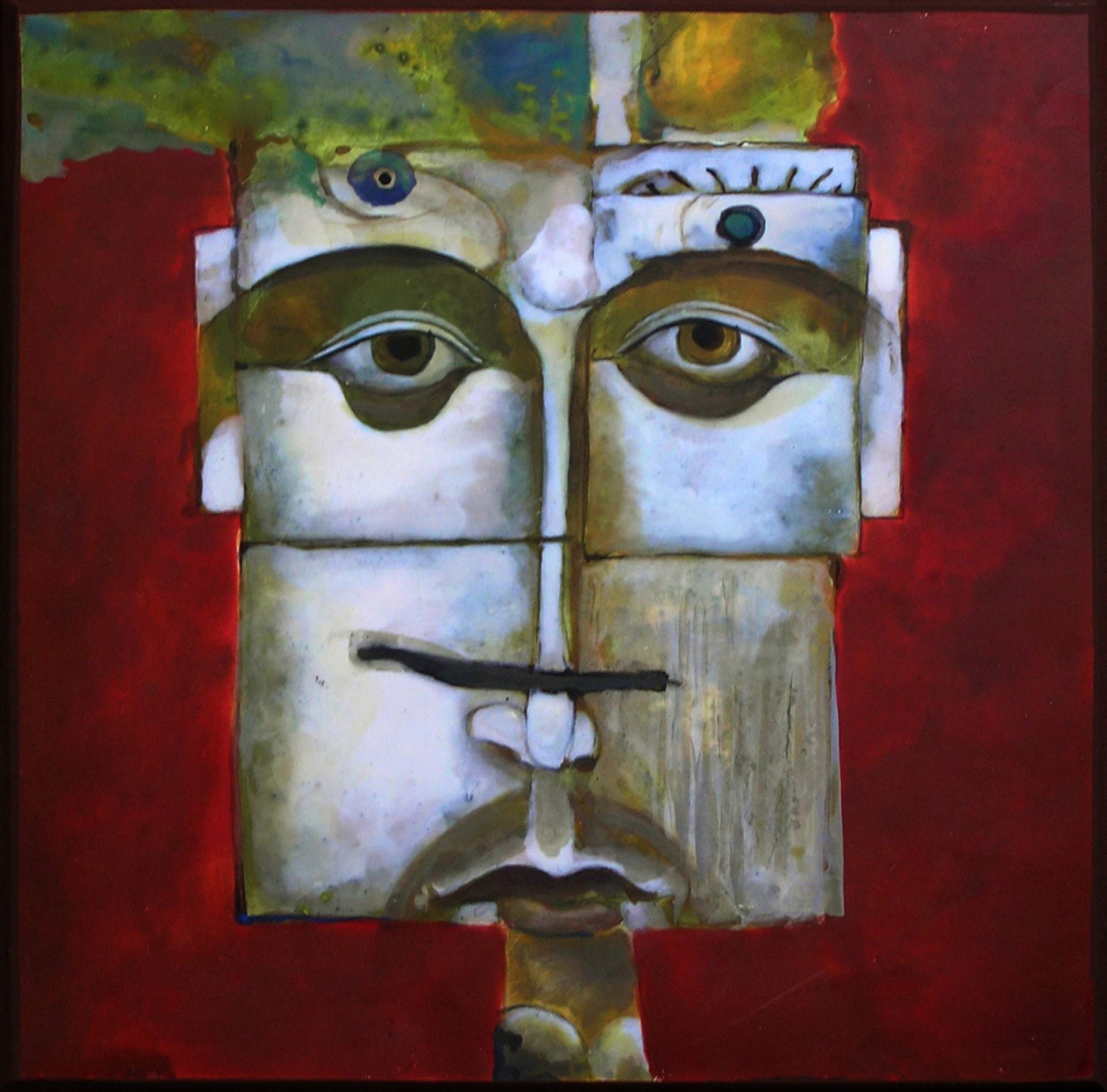
XL made his fortune betting against the state trials of political prisoners across the world. He became well-known to a niche group of political analysts and gambling addicts after several years for his ability to guess, to a T, the outcome of said trial.
Eventually, every judge in the Core and outside of it dreaded his wagers. On more than one occasion, there were reports of jurists anxiously checking to see if their trial was the subject of one of XL’s infamous bets. Some called him a revolutionary, though he often bet against the prisoner and even more often bet for prisoners whose guilt and general odiousness were beyond even the most generous mental gymnastics, which, as is the case now, were boundless and often elegant in their bespoke ideological justifications for various criminal actions.
He never spoke about these things, and there are, to this day, very few actual quotes from XL, despite the size of his legend. The more cosmically minded followers of his exploits came to believe that his bets themselves moved the needle.
Apparently, his bets were of such concern to the counter-terrorism establishment that various states banded together to offset whatever he betted on. And XL, the immaculate thorn-in-the-side, never bet under a pseudonym. His wielding of chance, I believe, was indeed cosmic, an exercise of power in a society muffled in and by all things.
The pressures from the state being too much, XL, who, by most reports, was born in Florida and spent much of his adolescence in public schools and gig jobs before the popularity of mass gambling, took his winnings and tried the classic routes of the monied, investing in minerals and specifically Wollastonite.
After several years off the radar, he rose again in the minds of the Adderall-addled investment types in ‘36 because the price of stock for several mining companies involved in Wollastonite exploded due to the centrality of its use in gel that had become popular for the booming plastic surgery procedure – angular cranial modification (ACM) or “Blocky.”
Who hasn’t looked through the photos of that time period? The heads of the rich (it was incredibly expensive) became more and more angled, and even faceted at the edges. XL owned stakes in some of the tools developed to perfect the operation, and even made a sizeable investment in an enterprising Thai fashion designer’s hats made to cater to the new, grotesque shapes.
Lip Bergen, writing in the edgy fashion magazine Trash City Weekly, said: “What a sight! On the avenues from K Street to Kinshasa, our overlords walk with arms akimbo, balancing their silicon-filled rectanlinear DOMES. It’s no wonder the young writers, who stick their tongues out all over the world at these lollipop-shaped scions, have started to call these blocky scions SQUARES. Little do they know! The irony is so obtuse it would have made my dad bend over backwards.”
On the cover of the New-York-London Times (NYLT) (now called the Mid-Atlantic Times (MAT)), a photo of two people with unisex teflon suits pressing their flat faces together grounded this trend to a halt. Dubbed the “10 Billion Dollar Kiss”, it was all hair and angles and ears, with only a slight gap between the flat-faced lovers. The market crashed. Luckily, XL had bought shares in MAT not too long before, as well as Trash City Weekly, incidentally, and was able to capitalize on the Newspaper Revival.
He was also a shareholder, it turns out, in the surgery practice that claimed to be able to reverse the Blocky procedure, titled “The Deflator Strikes Back Against the Angles.”
The subject of the piece, one Colonel-Doctor Esteban Deodata Luz Obregon (Ed Lo), grew up in the slums of Tijuana and worked as an assistant to an off-market plastic surgeon that serviced the aspirant lower-middle-classes of San Diego, where he developed a deep knowledge of plastic implants and skin attributes and an intense fixation (and disgust) for the clientele, mostly white women who had grown up on reality television.
In the profile, Ed Lo was quoted as saying, “I am a priest of plastic, yes, but you know, somewhat reformed. These people see themselves in the mirror or on social media day after day and can’t see the incremental changes. But then they see their faces in print, and they’re horrified. I don’t know why. I’m not sure why it’s different, but I know that they want to go back, to not be the Blocky anymore.”
Ed Lo performed thousands of “decubings” but was arrested a few years after the trend and counter-trend died down. A small recording device that transmitted audio was found in the plastic extracted from a cadaver of one of his patients (natural death), and it turns out Ed Lo had been listening to the conversations of dozens of his most high-profile clients’ lives. It was found that he made millions betting on the prediction markets on the knowledge he gained therein. Ed Lo had not had any direct correspondence with XL, but it was noted, quietly, during the trial that XL had paid for Ed Lo’s lawyers.
After this, XL hit the prediction markets again, never losing. He bet on a variety of things, from elections to the quantity of movies released in a year, and the number of houses destroyed in specific traumatic events. Some countries put warrants out for his arrest, while churches converted to study of his predictions, especially one in Mobile, Alabama, that called itself the Church of the Monied Profit, which rightly saw in XL, with his unique combination of dubious financial success and inexplicable knowledge, the nature of American divinity.
Eventually, his profile grew to such an extent that he himself became the subject of dozens of bets. They ranged from “XL will grow horns and burst into flames” (still open) to “XL will be found to have a secret twin.”
It was around this time that XL’s public behavior started to change. He bought property in the Gulf, massive multi-story apartments in glittering skyscrapers, whole blocks in Buenos Aires. He bought clubs and was seen having lunch with narcos, pop stars, and sausage magnates. The predictions quickened and proliferated to guess who he would meet with next and soon all the guests who attended his various clubs were required to show up in full burqua, men and women, and leave their phones in their cars. No evidence. The creator of one extremely popular proposition, “X will be outed as a pedophile,” was found dead by apparent suicide in his Istanbul apartment.
His complete retreat soon after the death of the Istanbul better raised eyebrows. People said he was hemmed in by the thousands of bets against him, which became increasingly dark by the day, and rarely resolved, a trail of infinite possibilities for the man. His own success became like a cage, an old story.
Soon after, XL returned to betting, even casting wagers on himself. Onc,e he leveraged half his sizeable fortune on a high odds bet on him “Flying to Paris” which paid out almost nothing, and then bet one dollar on the “extremely unlikely” proposition that he would eat pasta at a restaurant on top of the Burj Khalifa with Bono, which happened. People lost their minds, as one lucky fellow became a millionaire overnight. The church in Alabama spread to several other states and even became a majority shareholder in a vitamin company.
There were thousands and thousands of bets speculating on XL’s death, though at that point, he hadn’t been seen in public for years. It was estimated that the total money in pools surrounding his death was equivalent to the GDP of Botswana. The proposition “XL will die” became a solid place for investment firms to put their money. At one point, the Amazon Union of Texas attached its pension fund to the solid and stable odds of this proposition – some of the more science fiction-oriented or religiously minded among the group threw a fit and splintered off into their own delusion group, taking their funds with them.
XL, of course, did die. He passed, and despite his will, an extensive autopsy was demanded by a concerningly overzealous Quito official. He died from a niche form of lymphatic cancer, of which there was a betting line on the web, a small one. There was, again, only one beneficiary, who, due to the rarity of the condition, earned a mind-boggling payoff. Rumors still circle as to whether it was a doctor, a confidant, or even XL himself, the winner of the final bet in a life with a balance sheet that stretched around the world, touched millions, the sum of his storied existence.
I took out a reverse mortgage to fund a bet on the bastard growing horns and bursting into flames. I regularly monitor the CCTV above his gravesite. My payday is coming yet, and then my wife will take me back.